B2B and B2C platforms call for different UX strategies, because their users have different goals, decision-making processes and expectations. In short:
- B2B UX: it prioritizes functionality, integration and efficiency for professional users managing complex workflows. It offers detailed information and role-based customization, in a long-term partnership approach.
- B2C UX: it prioritizes simplicity, emotional engagement and intuitive design for individual consumers. It aims for quick conversions and personalized experiences.
Quick comparison
| Aspect | B2B priority | B2C priority |
|---|---|---|
| Main goal | Efficiency and integration | Simplicity and engagement |
| Decision process | Multiple stakeholders | Individual consumer |
| Relationship with the user | Long-term partnership | Transactional |
| Content needs | Detailed specs, case studies | Visual, engaging, short content |
| Onboarding | Structured, detailed guidance | Simple, visual guidance |
Whether you're designing for B2B or B2C, user feedback and data analysis tools like Screeb, Productboard and Amplitude help refine your UX strategies to meet these specific needs.
Pros and cons of B2C and B2B for product design (UX)
The differences between B2B and B2C user experience
Understanding the differences in expectations and workflows between B2B and B2C is essential to designing effective UX strategies. These differences shape how platforms meet the needs of their audience.
B2B priority: functionality, efficiency, integration
B2B UX is about supporting complex workflows and ensuring the efficiency of teams and departments. Platforms in this space often prioritize integration between systems, to streamline operations at scale.
They also adapt to longer decision cycles, providing detailed information that helps users make informed choices. For example, Salesforce offers advanced integration options and analytics dashboards, which let organizations adapt their workflows while keeping teams productive.
| B2B UX priority | Key features | Business benefits |
|---|---|---|
| Functionality | Support for complex workflows | Improves operational efficiency |
| Integration | Cross-system compatibility | Simplifies business processes |
| Depth of information | Detailed specs | Supports informed decision-making |
| Customization | Role-based access | Improves team productivity |
While B2B platforms focus on functionality and integration, B2C platforms favor simplicity and emotional connection to engage individual users.
B2C priority: simplicity, emotional appeal, engagement
B2C user experience is about creating appealing platforms that are easy to browse and that resonate emotionally with users. The goal is to make interactions enjoyable and effortless.
Netflix is a great example of this approach. Its personalized recommendations and smooth navigation create an engaging experience that makes users want to come back.
| B2C UX priority | Key features | User benefits |
|---|---|---|
| Simplicity | Intuitive navigation | Limits frustration |
| Emotional appeal | Eye-catching design | Strengthens engagement |
| Customization | Tailored recommendations | Increases satisfaction |
| Fast conversion | Simplified purchase journey | Improves completion rates |
As Medallia points out, success in B2C often rests on creating memorable experiences that resonate with users at every touchpoint.
These opposing priorities show how important it is to adapt UX strategies to the specific goals of B2B and B2C audiences.
Comparing UX design needs in B2B and B2C
Content and depth of information
B2B and B2C platforms serve users with very different priorities, and their content strategies must reflect that. B2B platforms often emphasize in-depth product documentation and detailed specs, to support complex decisions. Large B2B companies frequently rely on customer feedback to refine their technical resources and verify that they meet users' needs.
| Content aspect | B2B requirements | B2C requirements |
|---|---|---|
| Technical depth | Detailed specs and documentation | Core features and benefits |
| Pricing information | Complex pricing tiers and customization options | Simple, transparent pricing |
| Technical prerequisites | Detailed integration requirements | Minimal technical prerequisites |
| Content format | White papers and case studies | Visual, engaging, short content |
Once users have the right information, a well-designed onboarding becomes essential so they can use the platform effectively.
Onboarding and user support
B2B platforms rely on structured onboarding journeys that simplify complex workflows. Salesforce is a good example: it offers detailed tutorials and dedicated support channels to help teams master its platform quickly.
By contrast, B2C platforms bet on simplicity and ease of use from the start. Apple, for example, guides users with clean visual prompts that highlight the essential features, for an effortless start.
Interestingly, nearly half (46%) of top-performing B2B companies set clear customer experience goals for all of their teams, to ensure consistent, reliable support throughout the user journey.
But good UX design doesn't stop at onboarding: it also takes into account the distinct roles of decision-makers and end users.
Targeting decision-makers and end users
B2B UX faces an extra challenge: designing for both decision-makers and end users, who each have their own needs. Platforms must therefore offer solutions suited to each group's priorities:
| Audience | Main concerns | UX requirements |
|---|---|---|
| Decision-makers | ROI, integration capabilities, scalability | Detailed analyses, cost projections |
| End users | Day-to-day ease of use, workflow efficiency | Intuitive interfaces, productivity tools |
To meet these varied demands, high-performing B2B platforms often offer role-based access and customized views. Decision-makers and end users get the tools and information they need, without compromising the platform's overall usability.
Adapting UX strategies to B2B and B2C
B2B strategies: improving usability for complex tasks
B2B platforms often handle complex workflows, which require a focus on functionality and efficiency. Elements like contextual tooltips and detailed onboarding journeys are essential to help users find their way without losing productivity. In fact, 50% of top-performing B2B companies actively collect and analyze customer feedback across all channels to refine their user experience.
To meet the challenges of complex workflows, high-performing B2B platforms rely on features like:
| Functionality | Goal | Impact |
|---|---|---|
| Contextual help | In-app documentation and tooltips | Reduces support tickets by offering immediate help |
| Role-based views | Interfaces tailored to each role | Improves workflow efficiency for each team member |
| Integration tools | API and connector documentation | Simplifies integration between platforms |
While B2B UX aims to streamline complex operations, B2C approaches seek to captivate users through simplicity and emotional connection.
B2C strategies: simplifying and engaging users
B2C platforms prioritize easy-to-use, emotionally engaging experiences, so that users keep coming back. A recent study indicates that 47% of leading B2C companies analyze customer data every month to improve their user experience. This data-driven approach ensures journeys that are both enjoyable and effective.
Netflix is a good example of successful B2C UX. The platform excels thanks to smooth navigation, cross-device compatibility and one-click actions for common tasks, which keep users engaged and satisfied.
Tools to track and optimize user behavior
Modern UX design relies heavily on data. Tools like Screeb offer session replays and AI-driven analysis to study user behavior in both B2B and B2C. In B2B, these insights help refine complex workflows; in B2C, they support personalization and strengthen engagement.
To improve UX effectively, companies need to track key metrics suited to their audience:
| Metric type | B2B priority | B2C priority |
|---|---|---|
| Engagement | Time spent in key features | Session duration |
| Retention | Account expansion | Repeat purchases |
Product analytics tools for B2B and B2C
To build effective UX strategies for B2B and B2C audiences, product teams need the right analytics tools. Here are three platforms that are particularly helpful for improving the user experience.
Screeb: feedback and insights
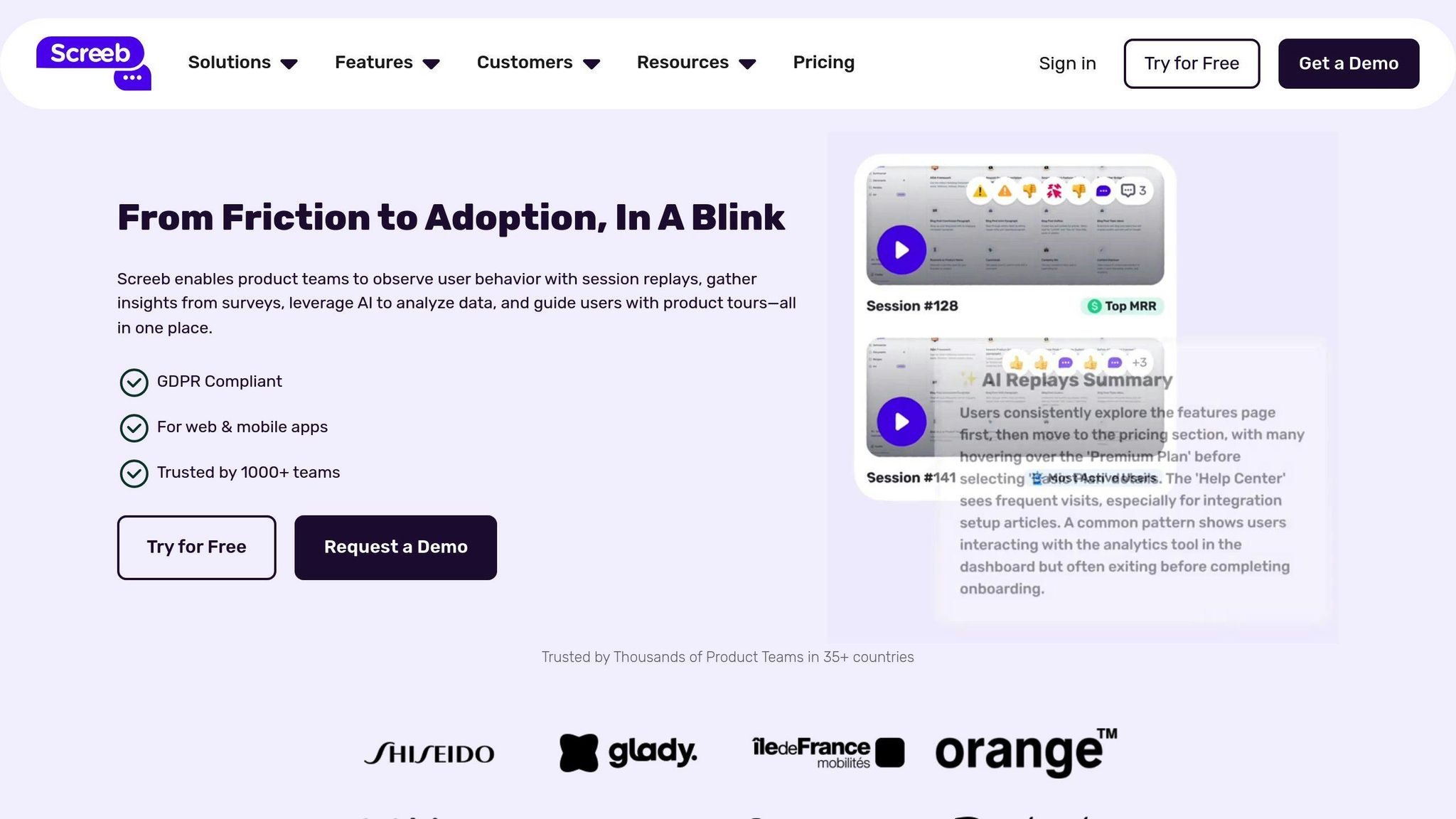
Screeb combines session replays with AI-driven analysis to understand user behavior and eliminate friction points. For example, a B2B customer reduced its support requests by 30% after using Screeb to simplify its onboarding processes.
Productboard: prioritizing features with user feedback
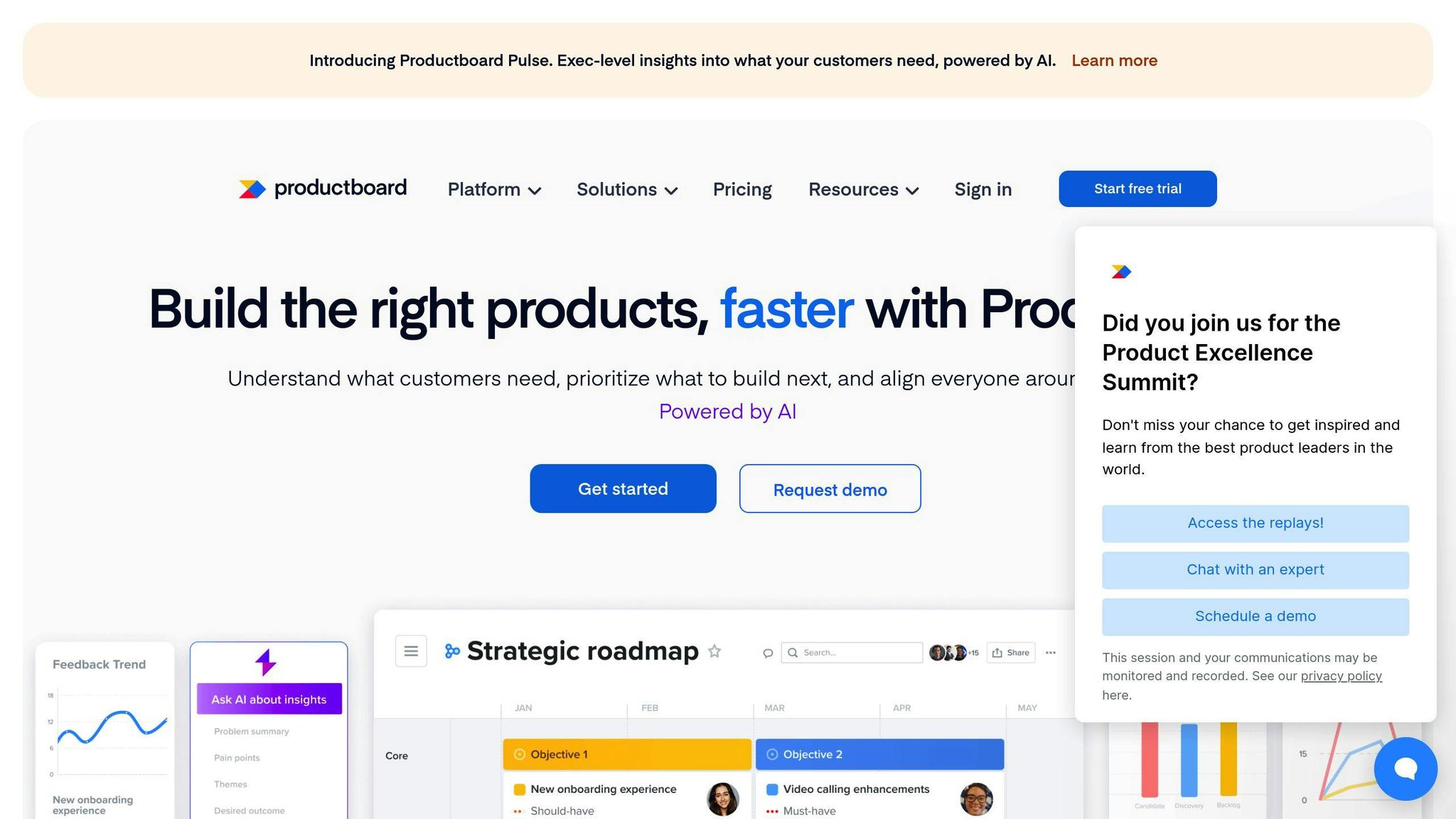
Productboard helps teams focus on the features that matter most to users, based on their direct feedback. A B2C e-commerce platform reported a 25% increase in user engagement after aligning its development with user preferences.
Amplitude: behavioral analytics to optimize
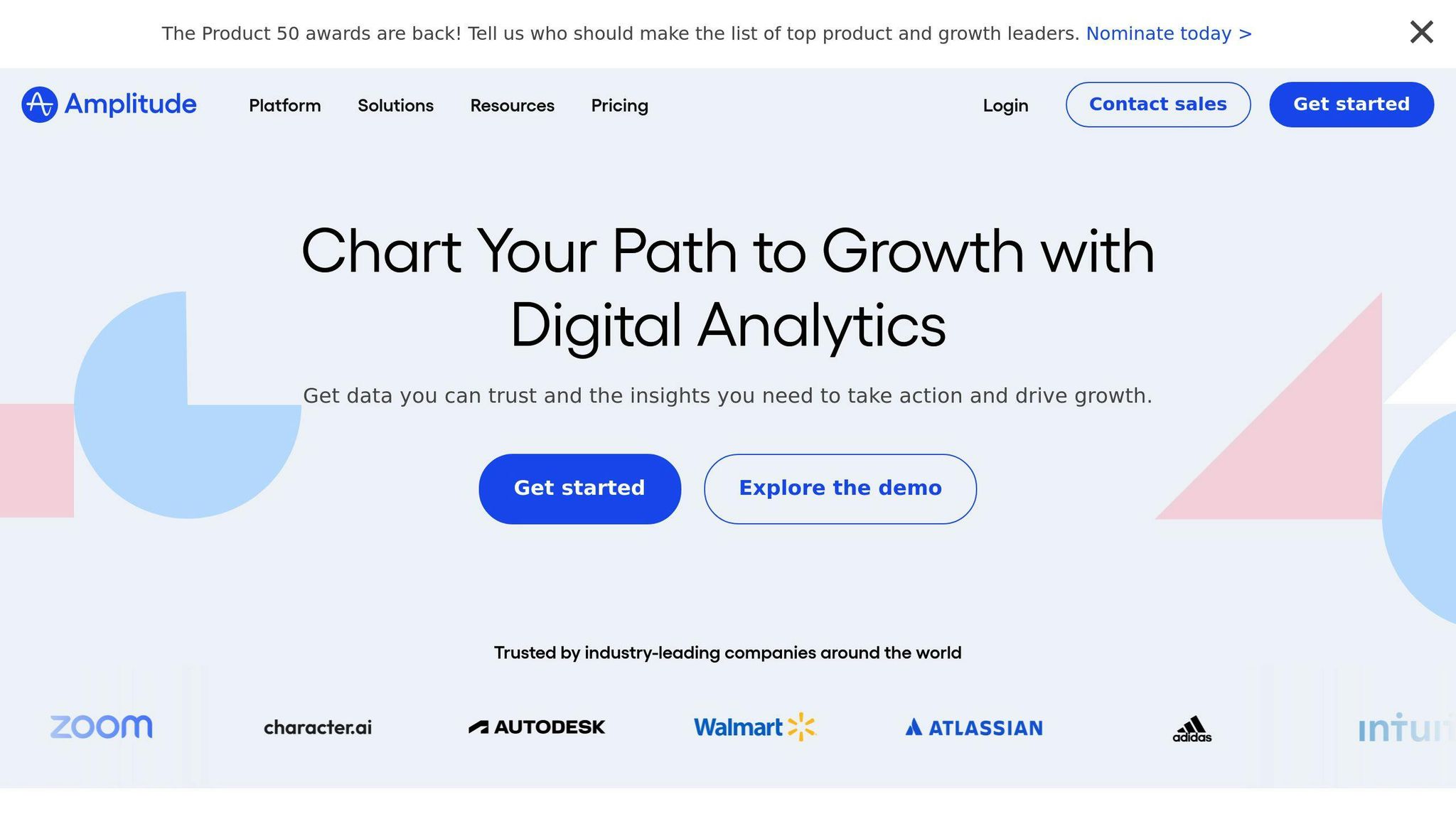
Amplitude provides detailed behavioral analytics to improve product performance for both B2B and B2C users. Companies using Amplitude often report improvements such as a 15% increase in engagement and 10% in retention.
Here's a quick comparison of how these tools meet each audience's needs:
| Tool | Key feature | B2B application | B2C application |
|---|---|---|---|
| Screeb | Session replays, AI analysis | Streamline workflows, reduce friction | Improve checkout journeys |
| Productboard | Feedback prioritization | Align features with business goals | Focus on users' favorite features |
| Amplitude | Behavioral analytics | Track feature adoption, team collaboration | Increase retention, reduce abandoned carts |
And here's how they measure success across types of analysis:
| Type of analysis | B2B metrics | B2C metrics |
|---|---|---|
| User behavior | Feature adoption, time-to-value | Conversion rate, session duration |
| Impact on teams | Collaboration patterns, account growth | Retention rate, cart abandonment |
Conclusion: adapting UX strategies to B2B and B2C
When it comes to user experience, B2B and B2C audiences have distinct priorities. B2B users focus on functionality, efficiency and detailed product information, while B2C users value simplicity and emotional engagement. These differences shape how companies approach user feedback and analyze data to improve their strategies.
Both types of companies turn to customer feedback and analytics to refine their UX, which underlines the need for continuous improvement. One thing is clear from the data: putting the customer at the center of UX design is decisive for success in both sectors.
Interestingly, the gap between B2B and B2C experiences is narrowing. As Resonio explains:
"B2B users have raised the bar for the overall quality of the experience. They expect the same level of polished design, visual appeal and seamless access across all platforms as they get in consumer products."
This shift means UX strategies must now meet overlapping expectations, while still addressing the specific needs of each sector. Here's an overview of what makes each one succeed:
| Industry | Key success factors |
|---|---|
| B2B | Detailed product information, workflow optimization, strong support systems |
| B2C | Emotional connection, fast service, personalized experiences |
To stay ahead, companies need to strike a balance between these specific requirements and the rising expectations across all sectors. Relying on tools like Screeb, Productboard and Amplitude helps teams refine their UX strategies and deliver experiences that leave a lasting impression.