Product-led growth is a philosophy that treats product usage as the main engine for acquiring, converting, and expanding users. Today, we dive into Screeb's product-led growth strategy for redesigning its B2B SaaS onboarding process, which brought a significant improvement in user experience and performance metrics.
Identifying the need for change
After launching Screeb's self-service features in Q2 2022, we broadened our horizons by building new features and growing our team. At that point, the priority was to keep building our platform and delivering value to our existing users, rather than acquiring new users or optimizing their onboarding.
But after our Seed round and the arrival of new team members, we had everything we needed to accelerate our growth, with a product that could become a major asset. Close observation and eye-opening feedback from our new hires showed that our B2B SaaS onboarding could be optimized to improve the user experience and overall performance.
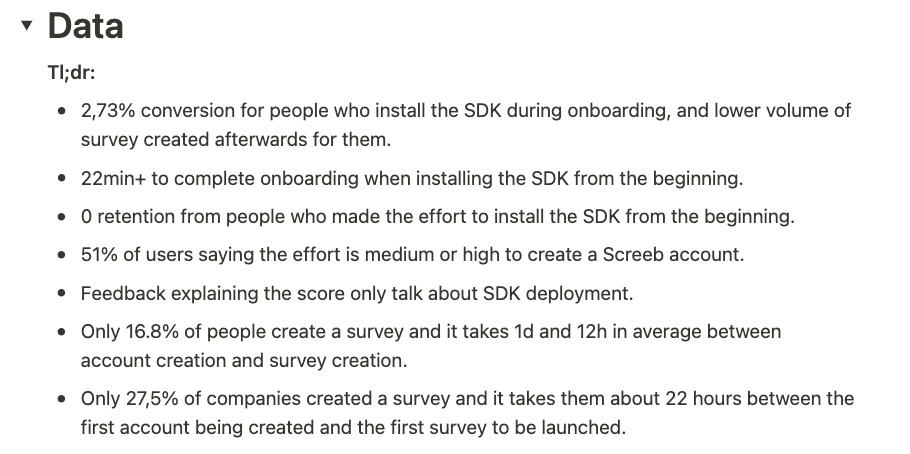
Excerpt from our internal analysis document
A rigorous analysis of user journeys
Determined to improve, we ran an in-depth analysis of user journeys and performance metrics. We spent a lot of time in Amplitude and Screeb to understand what was working well and what needed to be improved. We dissected sign-up funnels, studied user behavior after sign-up, examined retention data, and scrutinized user feedback.
The results were revealing: many users dropped off before they even saw the real value of our product, which showed we needed to reduce time-to-value.
A product-led growth approach to onboarding
To refine our onboarding strategy, we recognized how important it is to deliver value to our users quickly. We undertook a complete redesign of the onboarding process, making sure every step of the user journey was meticulously planned and executed.
We used a Miro board to map the journey, visualize each step of the new process, identify potential blockers, and propose solutions. The board also became a creative space, where we drew inspiration from high-performing B2B SaaS models and from the online resources provided by the Growth Design team. This visualization guided us in designing the new interfaces and also served as a blueprint for the developers during implementation.
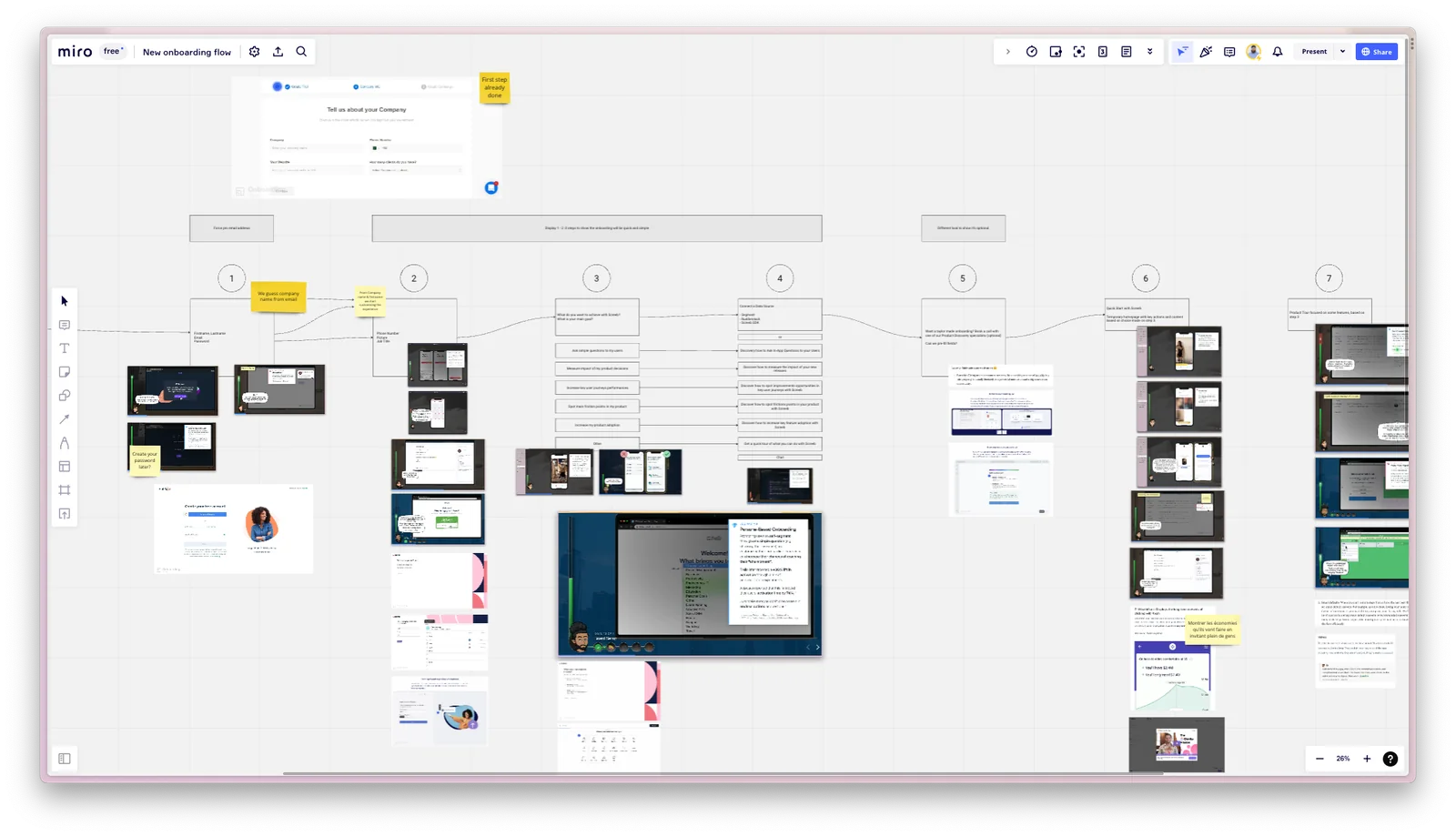
Our Miro board for this project: steps, ideas, and inspiration
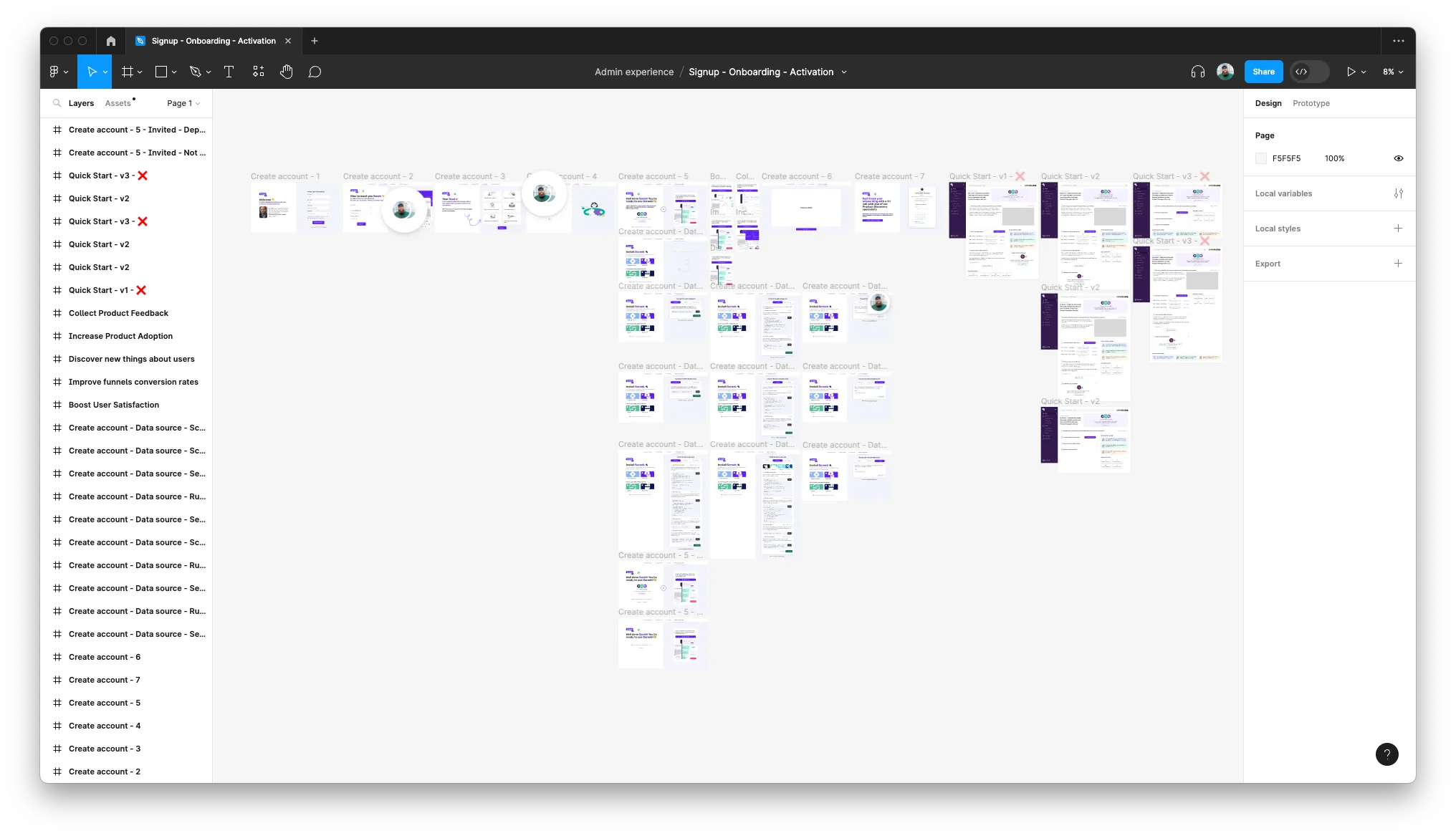
The matching Figma file, with our new onboarding screens
From the Miro board, we designed the screens in Figma and built a prototype to run user tests. With Screeb, we recruited participants and talked with people who weren't using Screeb yet, so we could test this new approach with people who knew neither our product nor our value proposition. Since our goal was to reduce time-to-value, it was crucial to see whether these users quickly saw the value of the product.
Our results
Before the redesign, our conversion rate was only 2.73% for users installing the SDK during onboarding. The process took more than 22 minutes on average, creating a major barrier to the full Screeb experience.
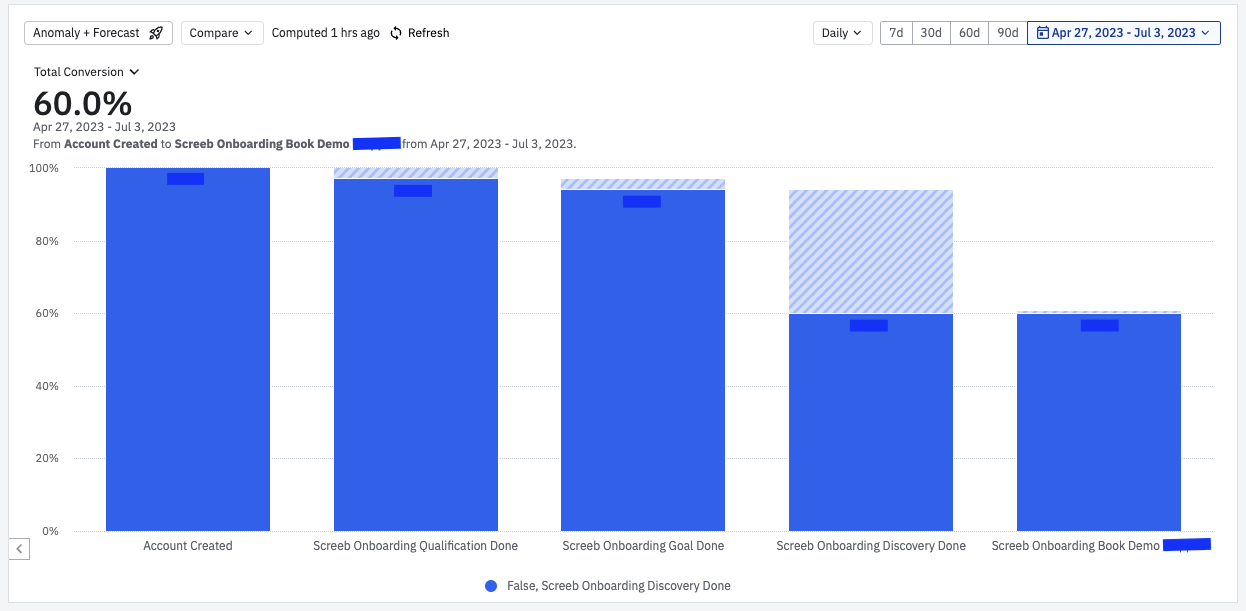
Our product-led growth strategy triggered an impressive transformation. After the redesign, the conversion rate climbed to 60%, a remarkable improvement that multiplied the performance of this funnel by 20. We also saw a sharp increase in survey creation after sign-up, reaching 43%, and the average time needed to create a survey dropped to under 2 minutes after account creation.
On the qualitative side, we improved our “low effort” score after onboarding, confirming that the experience was much more pleasant for new sign-ups.
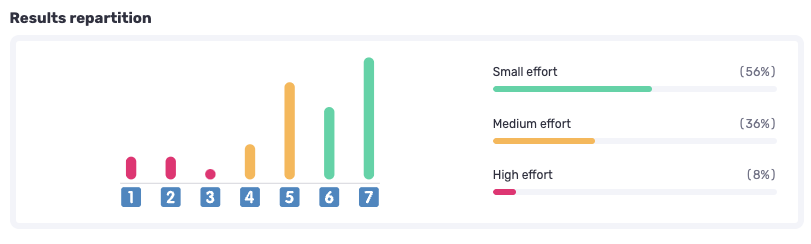
This transformation wasn't down to chance. It came from a systematic, data-driven approach, at the heart of our product-led growth strategy. We adjusted our onboarding process based on real data and user feedback, which made the experience more intuitive and effective, and better suited to users' needs.
The road ahead for optimizing our onboarding
At Screeb, our quest for a perfect user experience doesn't stop here. Our roadmap includes further optimizations of the B2B SaaS onboarding. As you can see in the screenshot above, most users still drop off at the goal selection step, which leaves us a lot of room to improve.
We also plan to improve our in-app messages, polish our product tours, and adjust our email sequences based on the new data collected during onboarding. This should let us increase survey creation and adoption of key features even further.
We aim to personalize onboarding by aligning our content and guides with each user's specific goals. The end goal is simple: cut time-to-value as much as possible and offer a tailored journey that resonates with each user.
Conclusion
Screeb's transformation shows the power of product-led growth. With a user-centered, data-driven approach, we redesigned our B2B SaaS onboarding process and significantly improved every performance metric. We hope our journey inspires you to tap into the potential of product-led growth to transform your own B2B SaaS onboarding and get better results.