
In the ever-changing world of digital product management, staying attuned to user demands can be an arduous task. Smallable, an online fashion store, experienced this firsthand. Before working with Screeb, they struggled to manage the time needed to collect user feedback and identify pain points efficiently. This case study reveals how Screeb's innovative tools not only helped Smallable overcome these obstacles, but also led to impressive results. From collecting a substantial amount of user feedback to identifying new pain points every month, the results were transformative. Dive into Smallable's journey, which, with Screeb's help, revolutionized its product discovery process.
The context
As digital product leaders, we know time is a precious resource. Smallable, a leading online store for children's and women's fashion, faced this challenge even more acutely. Its commitment to following the latest trends while delivering an exceptional user experience came with unique challenges.
In a constantly evolving market where customer preferences change quickly, Smallable had to keep adapting. Meeting user needs meant collecting feedback regularly and precisely identifying friction points in the user journey, tasks that are at the heart of effective Product Discovery.
The challenge
Before turning to Screeb, Smallable had significant difficulties in its product discovery work:
- Time constraints: The process of collecting and analyzing user feedback was time-consuming, slowing the team's ability to make quick decisions.
- Lack of efficiency: Identifying critical problems, essential to successful Product Discovery, took laborious effort without delivering results actionable enough.
- Risk of stagnation: Without a suitable solution, Smallable risked losing sight of its users' expectations in a constantly shifting competitive environment.
The need for an agile, simplified solution to optimize their product discovery process had become unavoidable.
The solution
This is where Screeb played a decisive role, bringing an innovative solution to the challenges Smallable faced. Screeb, an intuitive software as a service (SaaS), specializes in facilitating Product Discovery, particularly for product teams operating in demanding environments like e-commerce. With its tools, Smallable was able to overcome its time constraints and improve its ability to collect user feedback efficiently while quickly identifying key friction points in the customer journey.
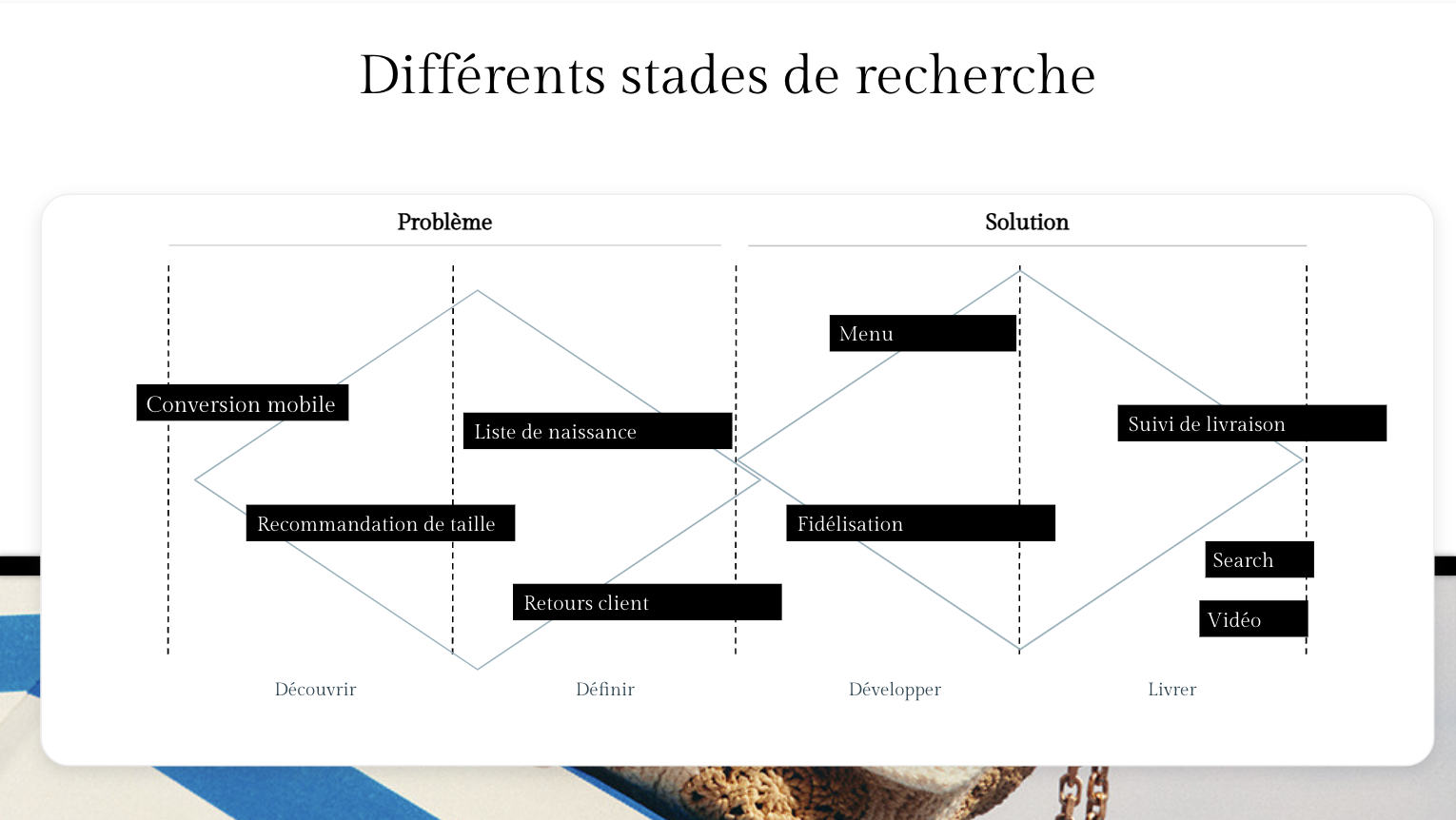
A methodology built around the double diamond
By integrating Screeb into their process, Smallable aligned its feedback collection strategy with the double diamond methodology, a structured approach recognized in product management discovery. This framework consists of four stages, split into two main phases:
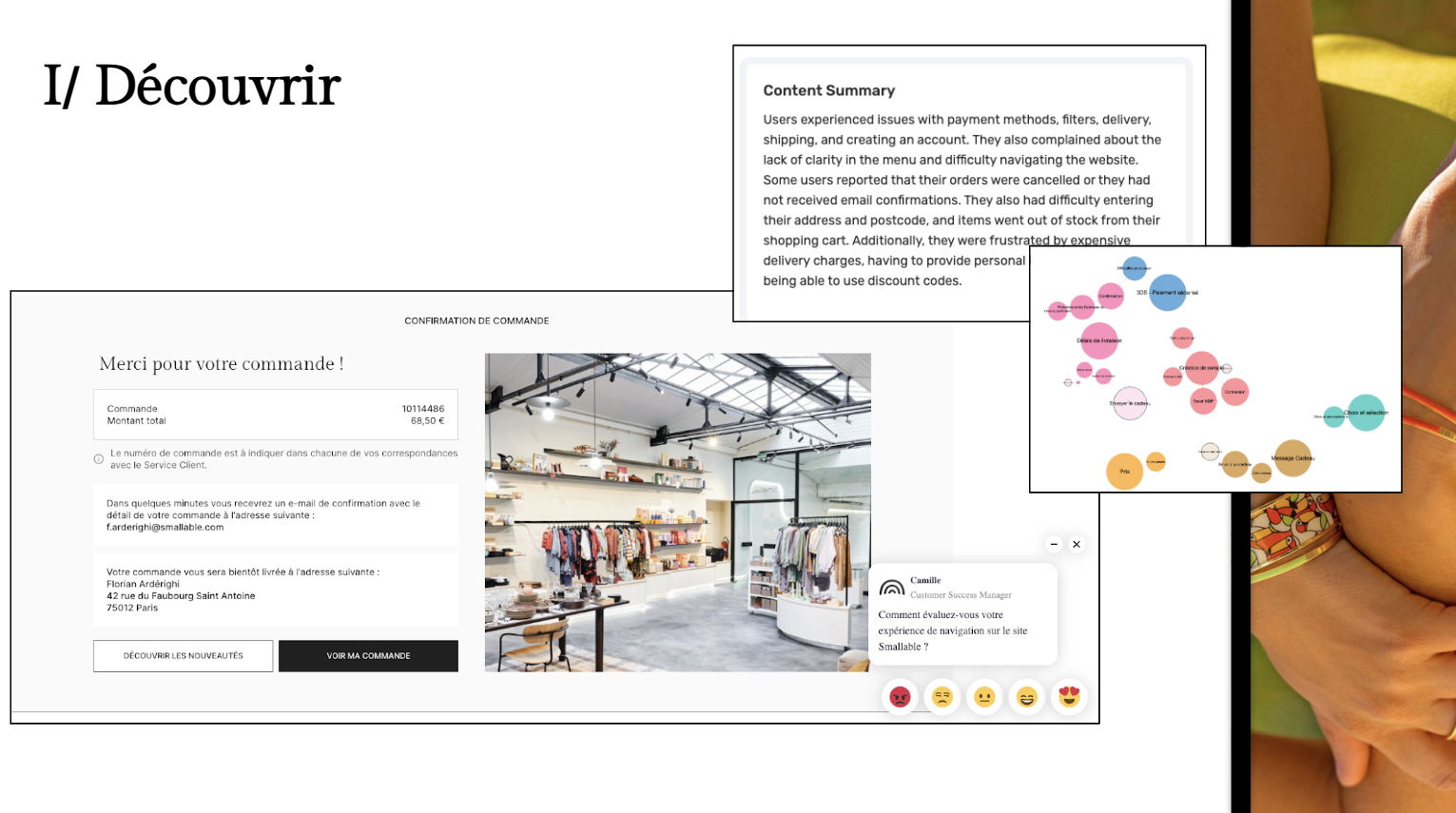
- Discover: Screeb let Smallable capture qualitative and quantitative feedback during the discovery phase. Through in-app surveys and contextual feedback mechanisms, Smallable was able to collect relevant insights directly from the app, offering a deep understanding of user behavior and expectations.
- Define: The analysis of the data collected, made easier by Screeb, helped Smallable pinpoint the friction points in the user experience. These insights were organized and prioritized, giving a clear view of the problems to solve.
- Develop and test: Building on the problems identified, Smallable designed prototypes and quickly tested solutions with its users. Screeb sped up the validation process, cutting the time needed to confirm that the proposed improvements were relevant.
- Deliver and iterate: The continuous feedback gathered through Screeb let Smallable fine-tune the features it shipped and stay aligned with its users' evolving needs.
Tangible results from optimized product discovery
By adopting Screeb for their product discovery, Smallable saw several significant benefits:
- Effective feedback collection: Screeb turned a laborious process into an agile flow, with continuous feedback that enriched every stage of their product discovery.
- Better prioritization: Thanks to easier analysis of feedback, Smallable was able to focus its efforts on its users' most critical needs.
- Customer-centered products: By involving users directly in their design process, Smallable improved customer satisfaction and strengthened their loyalty.
- Valuable time savings: Screeb significantly reduced the time needed to go from discovery to delivery, letting Smallable stay competitive in a dynamic market.
Why is product discovery essential in 2025?
Product Discovery isn't just a way to design products, it's a strategic approach that lets you:
- Reduce the risk of building useless features.
- Align product goals with users' real needs.
- Deliver optimal, competitive user experiences.
Smallable perfectly illustrates the impact that structured product discovery can have on an e-commerce company. With Screeb, they turned a time-consuming process into an agile, user-centered approach, while maximizing their business results.
The results
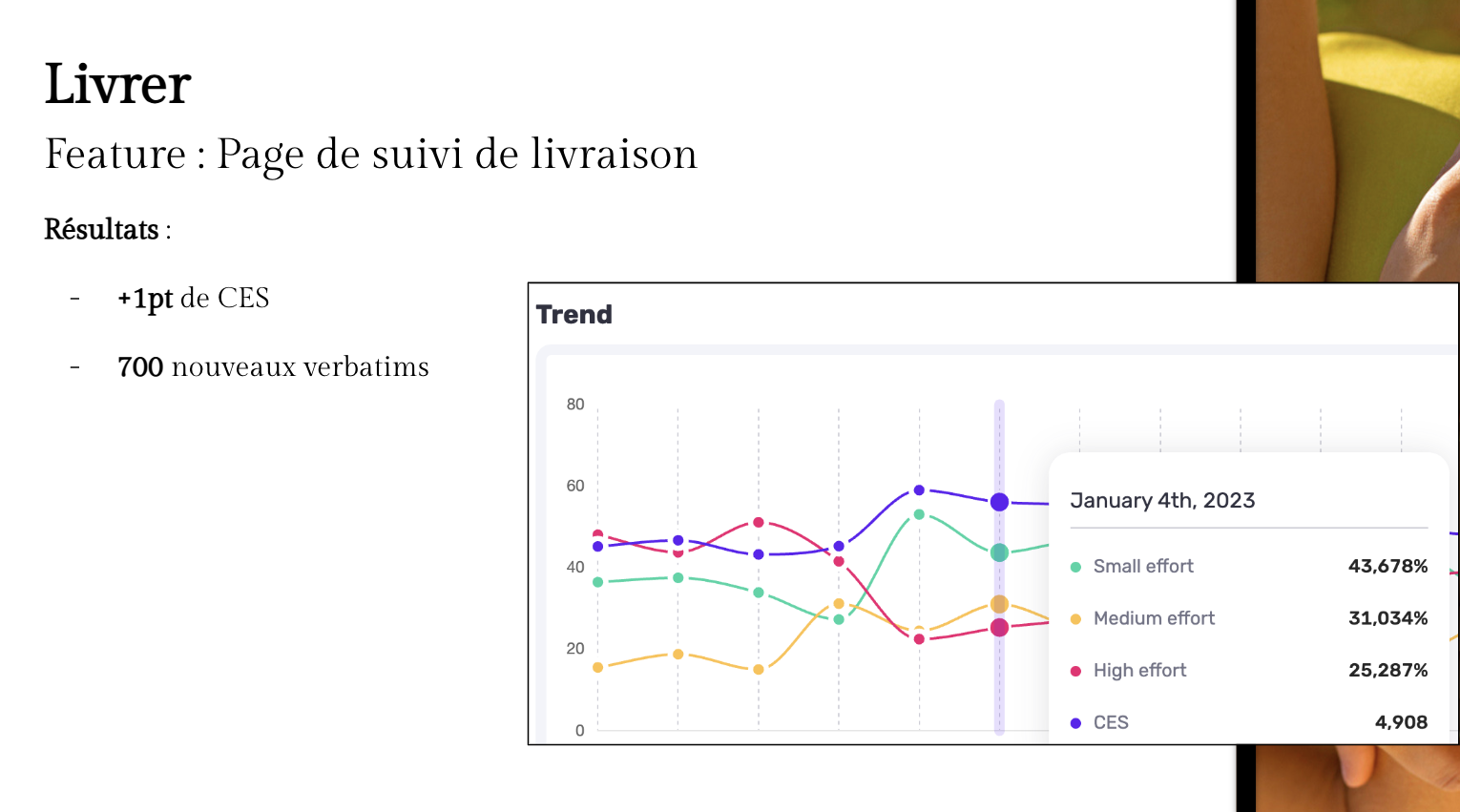
The results speak for themselves. Smallable saw a substantial increase in feedback volume, with more than 3,000 pieces of feedback collected per month. This notable improvement let Smallable continuously collect user feedback, providing valuable insights into customer preferences and experiences.
In addition, the ability to identify friction points also increased significantly. Smallable was able to identify 3 to 5 new friction points every month, which directly led to the creation of more user-friendly experiences and a considerable reduction in their Customer Effort Score (CES).
Furthermore, Smallable was able to recruit more people for interviews and get even more insights into how to improve their product. This data was essential in helping Smallable build a stronger, more intimate connection with its customer base and promote a culture of continuous improvement.
Screeb helped Smallable overcome its time constraints and let it collect user feedback efficiently, pinpoint friction points, and strengthen relationships with its customers. With Screeb, Smallable not only optimized its product discovery process but also went through a transformation in its digital journey.